


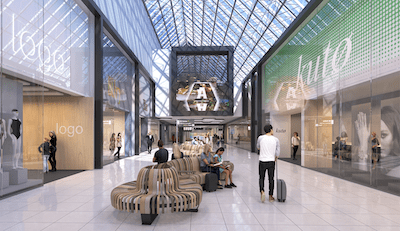
Manchester Airports Group commenced Phase 2 of Manchester Airport's extensive £1.3 billion Transformation Programme, which aims to completely transform the customer experience, introduces the implementation of cutting-edge technologies, and outlines plans to enhance personalization for passengers.
 GLO
GLOManchester Airport’s Transformation Programme is a £1.3bn investment, first announced in 2015, which will revolutionise the customer and colleague experience at the airport and provide world class facilities.
In 2021 the Terminal 2 extension, opened, doubling the size of the terminal, and providing the latest technology and a bright, modern environment.
The second phase of the transformation will see the original Terminal 2 building refurbished to match the quality and functionality of the new extension, delivering a modern, state-of-the-art passenger experience throughout, and introducing an even greater array of shops, restaurants, and other facilities for those travelling through it.
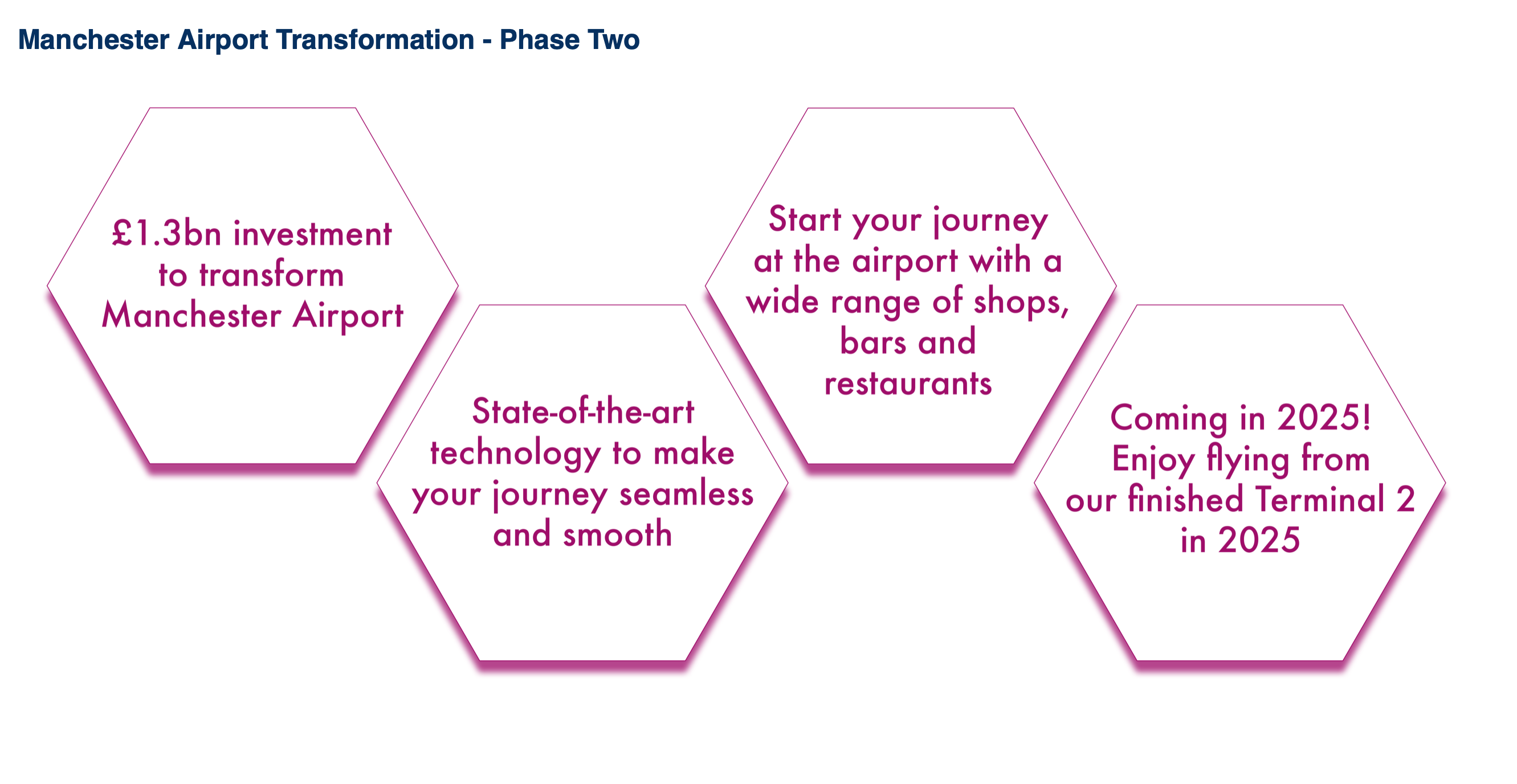
Jill Fraser, Transformation Programme Delivery Director at Manchester Airports Group, discusses the recent commencement of the next significant stage of Manchester Airport’s extensive £1.3 billion Transformation Programme. In this detailed interview, Fraser reveals how the programme aims to completely transform the customer experience, introduces the implementation of cutting-edge technologies, and outlines plans to enhance personalization for passengers.
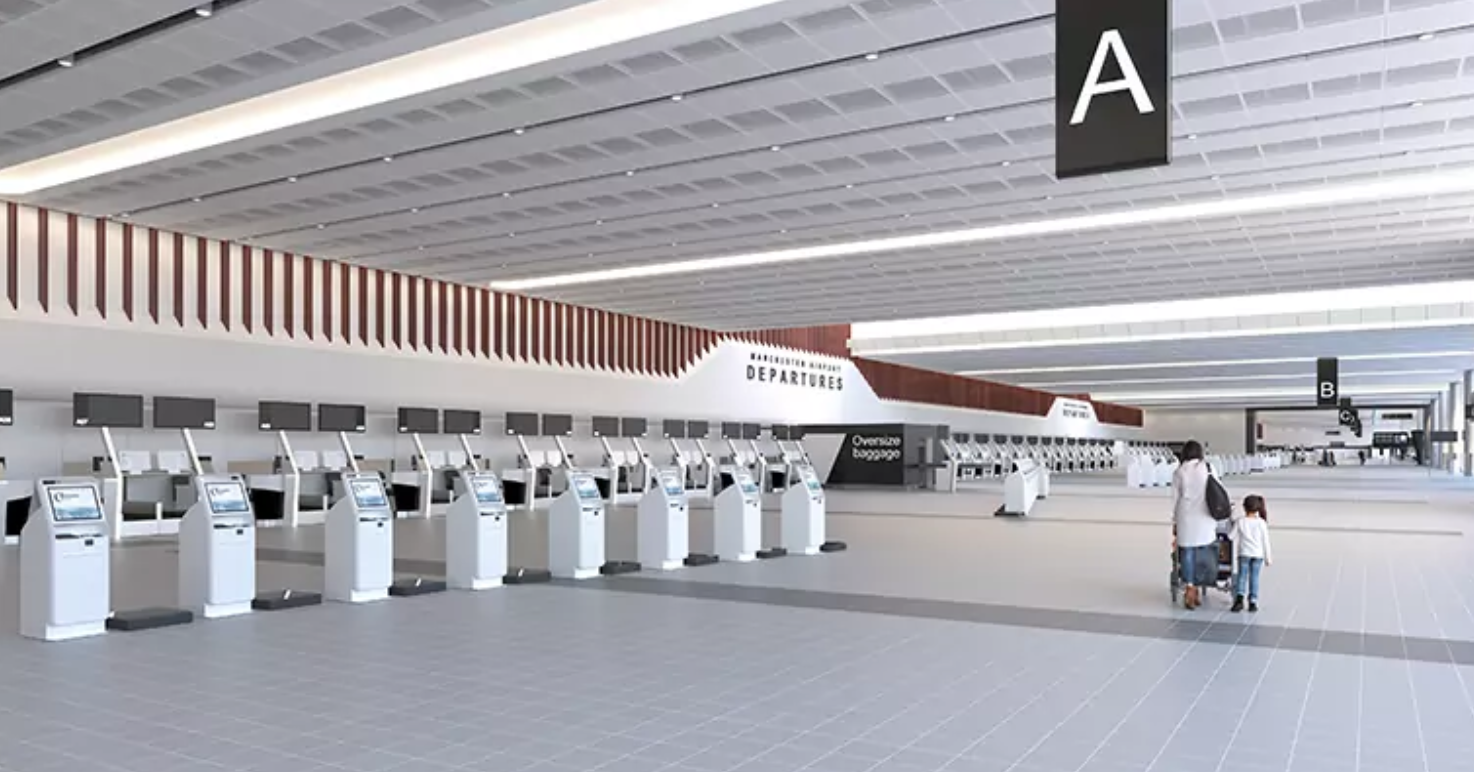
The initial phase of the Transformation Programme focused on expanding Terminal Two by adding a new extension, resulting in a 150% increase in its capacity. The second phase aims to further enhance the passenger experience by introducing spacious facilities, state-of-the-art technology and equipment, as well as new shops, bars, restaurants, and airport lounges. The program was initially announced in 2015 with a 10-year plan to revolutionize the customer experience. The latest investment will complete the transformation of Terminal Two, improving all aspects of the passenger journey, including check-in, baggage reclaim, and upgrading the airfield to accommodate next-generation aircraft.
In the upcoming phase, the original terminal building will be redeveloped, and an additional pier will be constructed. This will include 12 new boarding gates and flexible aircraft stands capable of accommodating various aircraft types, including the Airbus A380. The majority of the original building has been closed since before the pandemic, but it will reopen in 2025 with a new security hall and 27 new restaurants, bars, and retail units. Once the work is finished, Terminal One will close, and approximately 80% of passengers will utilize the new facilities. This expansion aligns with the vision of Manchester Airport to establish itself as the UK’s premier gateway in the North.
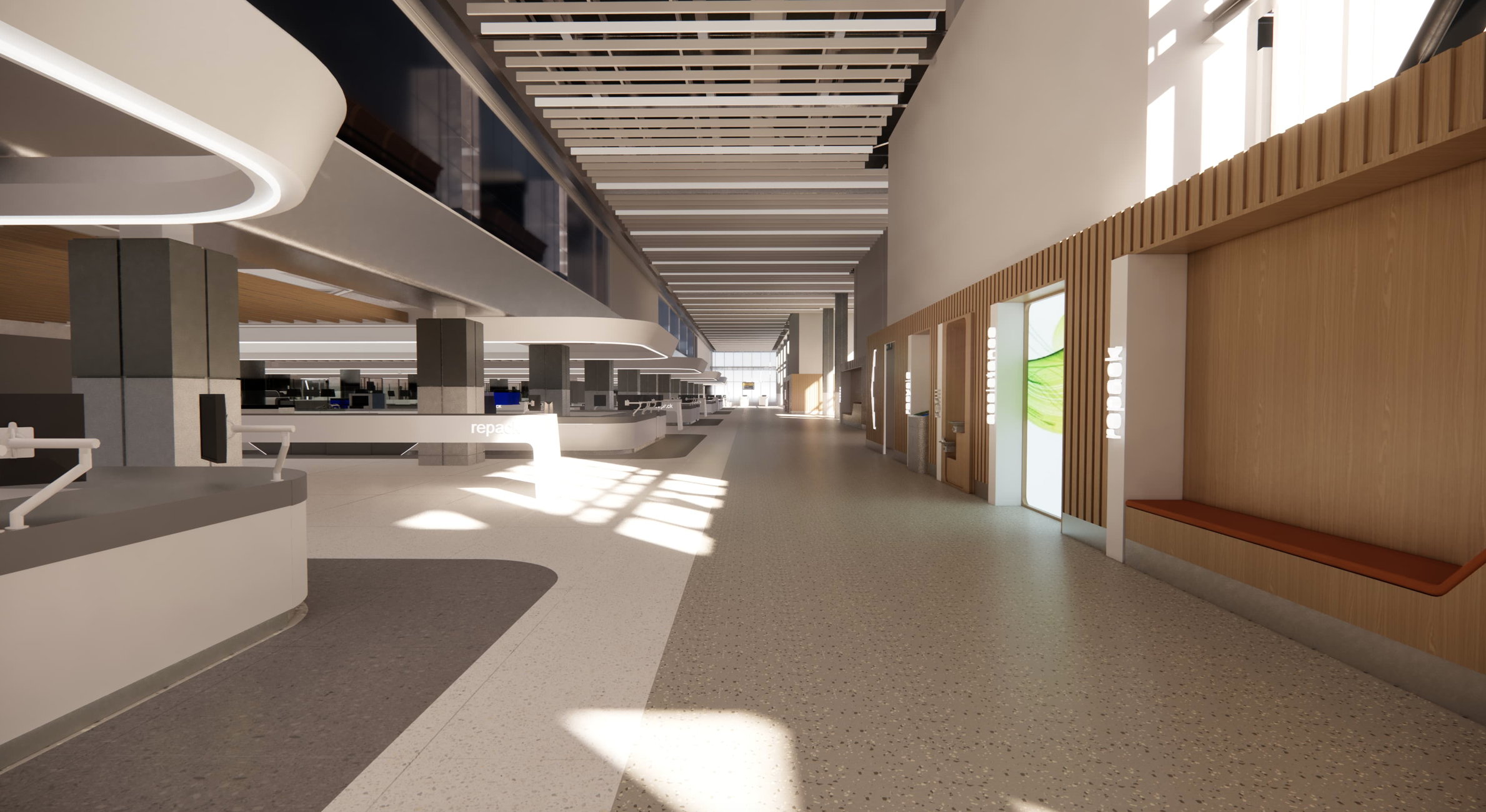
Manchester Airport is incorporating innovative technologies throughout the Transformation Programme to enhance the passenger experience and improve operational efficiency. For instance, the new security hall will feature next-generation computed tomography (CT) scanners, allowing passengers to carry liquids, gels, and pastes in their hand baggage, even in quantities exceeding 100ml. The new terminal will showcase various modern design features, such as updated check-in and security areas aimed at reducing congestion during busy periods. Additionally, an 83sqm digital screen, the largest of its kind in a UK airport, will provide interactive entertainment and information to travelers.
While the primary focus of the programme is the development of Terminal Two, it also involves reconfiguring the airfield to optimize the potential of Manchester Airport’s two runways and ensure efficient operations. This includes the implementation of a new dual taxiway system and flexible aircraft stands.
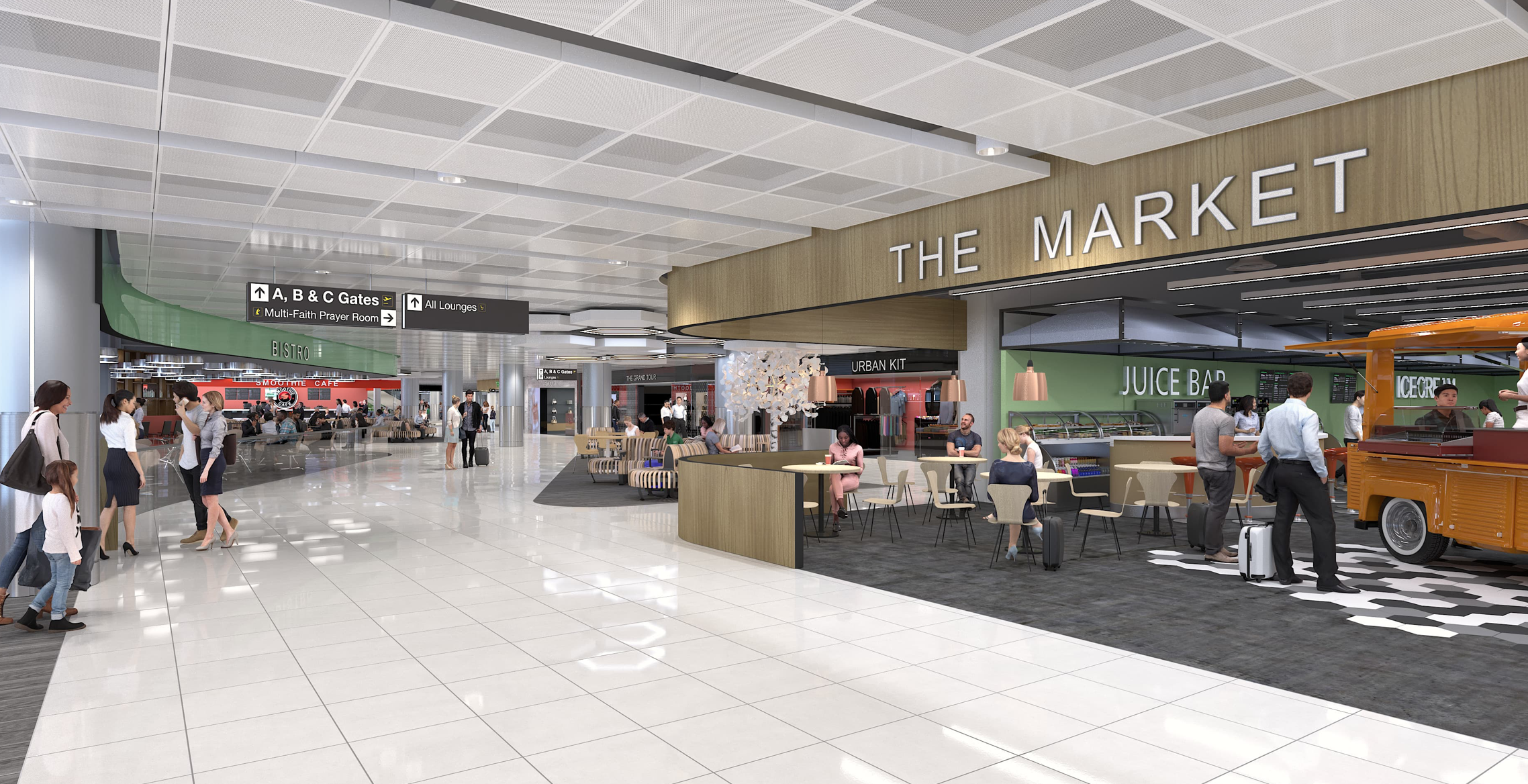
An essential aspect of the Transformation Programme is the aim to provide a more personalized experience for passengers, with a particular focus on the commercial and retail offerings in the expanded Terminal 2.
With an anticipated number of over 20 million passengers annually, it is crucial to accommodate the individual preferences of each traveler. Fraser emphasizes the significance of catering to a wide range of tastes, stating, “We need to ensure we cater for all tastes.” In order to achieve this, a mix of well-known high street brands and local independent chains will be incorporated into the terminal’s retail and dining options. The design of the terminal itself aims to evoke a sense of place by paying homage to Manchester’s industrial and cultural heritage.
During the first phase of the project, a combination of national and regional brands established their presence in the Terminal Two extension. This included establishments like Wagamama, an independent brewery from Salford, and a local coffee chain. Fraser mentions that the airport intends to replicate this diversity of options in the upcoming phase. Currently, the airport is in the process of inviting proposals for 27 new units set to open in 2025. The plans encompass a variety of exciting additions, such as a Champagne bar, a food court with a market hall ambiance, and a boutique shopping area resembling a high street. The goal is for all units, regardless of whether they house regional brands or well-known names, to convey a strong sense of place through their inventory, menus, or design.
