

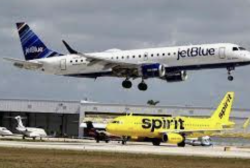
JetBlue Airways and Spirit Airlines have been barred from merging by a federal judge, who ruled that the proposed $3.8 billion acquisition of Spirit by JetBlue would violate Section 7 of the Clayton Act. The judge, however, did not permanently bar the two airlines from combining in the future,
 GLO
GLOJetBlue Airways and Spirit Airlines have been barred from merging by a federal judge, who ruled that the proposed $3.8 billion acquisition of Spirit by JetBlue would violate Section 7 of the Clayton Act. This decision, made by U.S. District Judge William G. Young, is a partial victory for the U.S. Justice Department (DOJ) in its antitrust suit. The judge, however, did not permanently bar the two airlines from combining in the future, denying the DOJ’s request for such an injunction. The ruling states that the decision applies only to the proposed merger as it currently stands.
Judge Young argued that the merger would substantially reduce competition at a time when other airlines, facing post-pandemic constraints, could not adequately replace Spirit’s presence. He expressed concerns that allowing JetBlue to acquire Spirit would eliminate a primary competitor, impacting innovation and price discipline. The ruling allows the airlines to attempt another merger in the future.
Both JetBlue and Spirit are reviewing the decision and considering their next steps in the legal process. The airlines believe that their proposed combination would enhance competition and choice, and they point out that JetBlue’s termination of the Northeast Alliance and commitment to significant divestitures address the Department of Justice’s anti-competitive concerns.
The ruling has left open the possibility for Spirit to seek another buyer, with analysis suggesting a Chapter 11 filing followed by liquidation as a potential outcome. The court’s decision highlights the challenges and regulatory scrutiny faced by airlines seeking to merge in a competitive industry.
Source: GLO
